

how to write a cookbook: writing and selling a proposal for #weeknightbakingbook
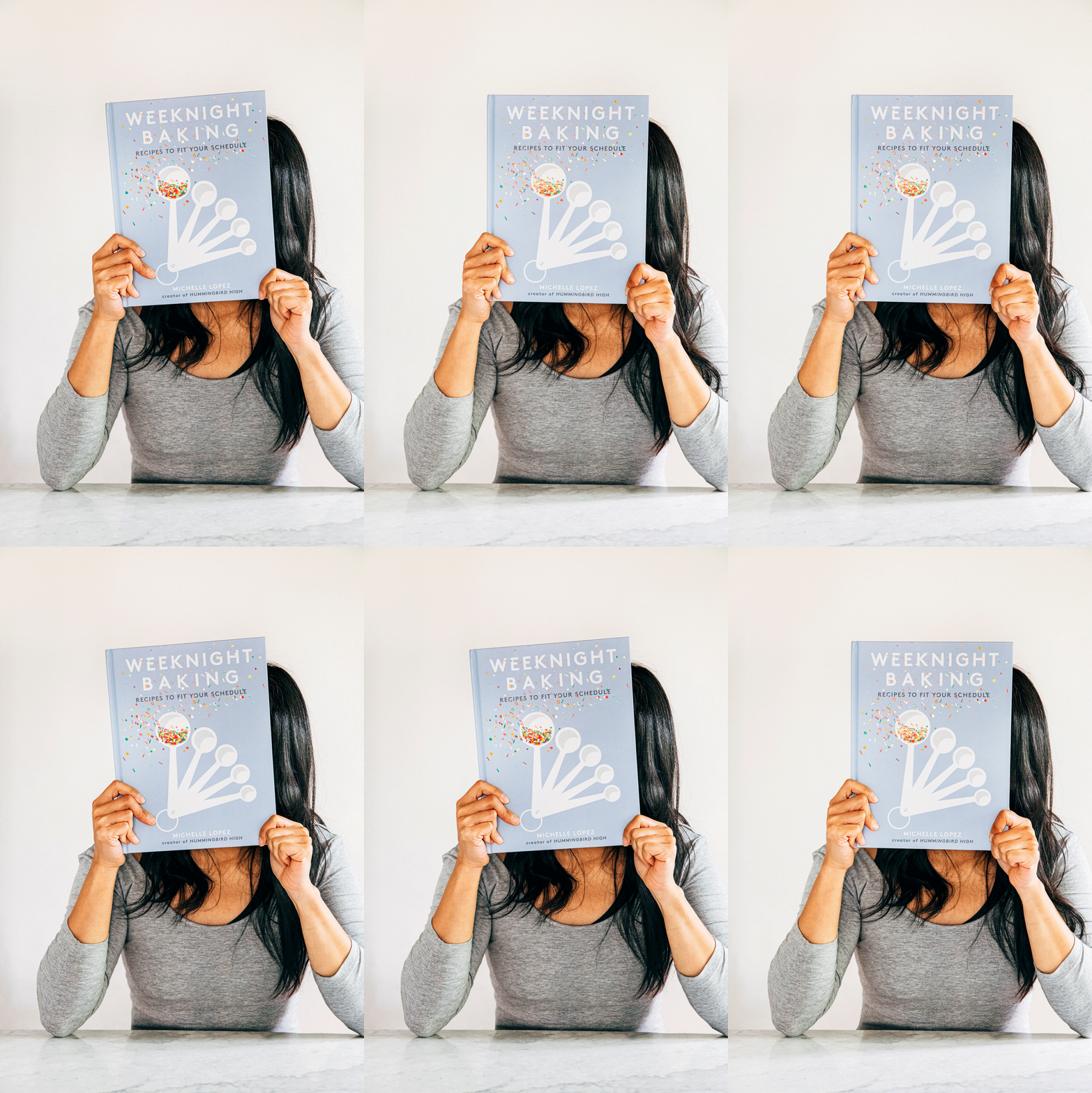
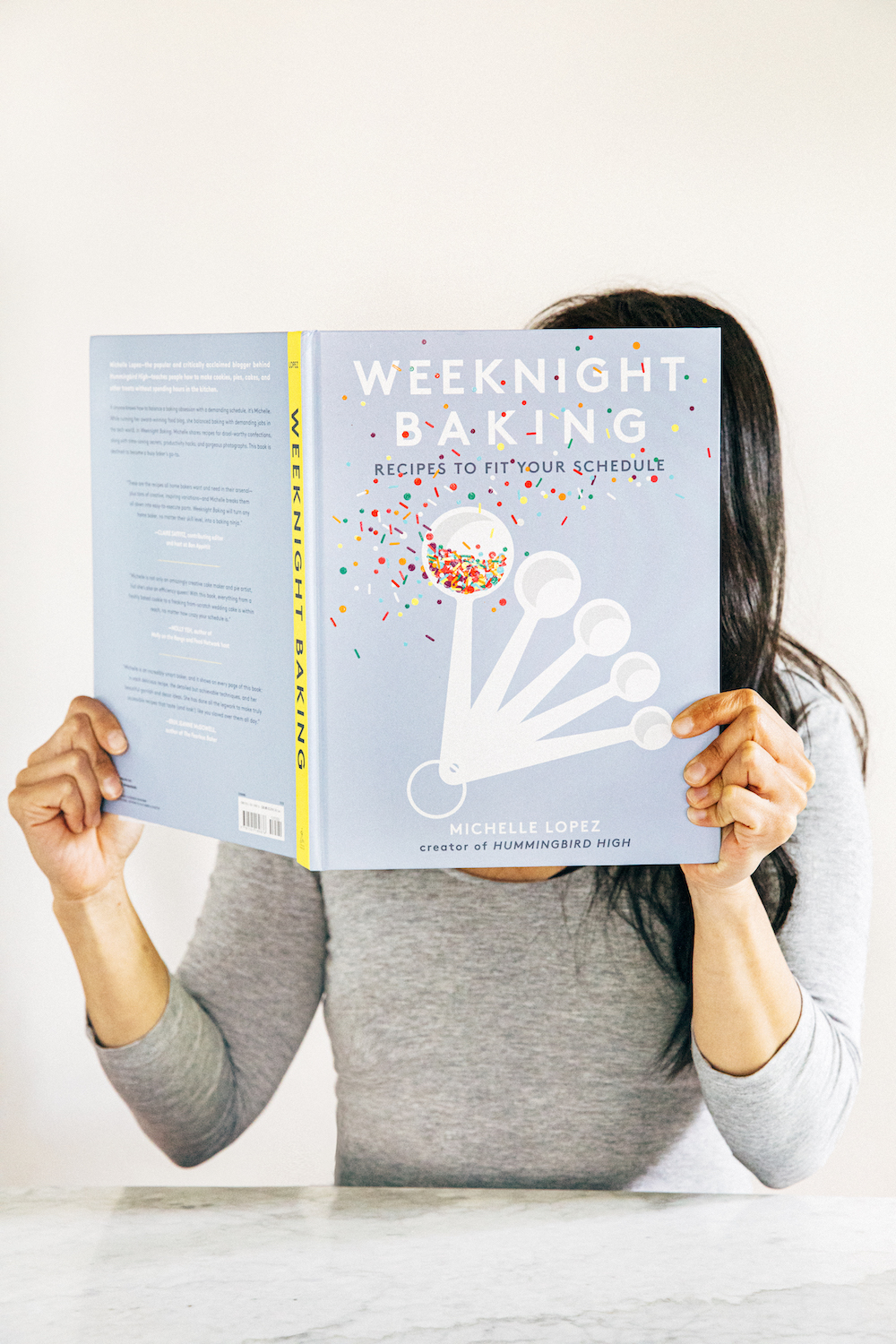
In case you missed it, my first cookbook, Weeknight Baking is coming out at the end of the month and I’m celebrating the occasion with lots of giveaways, sneak peeks, and behind-the-scenes posts! Be sure to check out this post to learn more about the concept of the book (like what is weeknight baking, anyway?) and pre-ordering info, because today I’m actually going to be focusing on something different: how the cookbook publishing process works, why I decided to write a cookbook, and what happened after I decided to do so.
One of the most frustrating things about working with the publishing industry is how opaque and withholding they can be with information. To remedy this, I decided to write the kind of post that I was looking for when I first started my cookbook writing process, complete with anecdotes about my own personal experience. It’s long and unwieldy, and I would be 100% surprised if the majority of you have the time and patience for it all. Sorry!
Although the post is meant to be read consecutively, I also divided the post up into different parts to help find what’s relevant and interesting to them. Some sections are full of information for aspiring authors, and others are specifically dedicated to telling the story of how #weeknightbakingbook came to be. Use the links below as shortcuts to each section:
Resources for Aspiring Authors
- The Cookbook Publishing Process
- The Financial Realities of Writing a Cookbook
- Why You Need a Literary Agent
- How to Write a Cookbook Proposal
- More Resources
The Story of Weeknight Baking
- How I Came to Write a Cookbook
- How I Found My Literary Agent
- Selling my Cookbook Proposal
- The Auction
- Why I Decided to Do It
The Cookbook Publishing Process
In a nutshell, the traditional cookbook publishing process has two major players: the author and the publisher. While the author is expected to provide the materials for the book (in the case of a cookbook, this would be a manuscript consisting of the cookbook’s text, recipes, and sometimes even the photos), the publisher will handle costs like designing the book, laying it out, printing it, and distributing it across stores to sell. In exchange for the materials, the publisher gives the author an advance—that is, a sum of money to help cover the costs of writing the book.
In a way, publishing a cookbook is very similar to how a tech start-up gets funded. A budding entrepreneur has an idea and writes a detailed business plan for it. He or she then shops the plan around to venture capitalist firms. If a venture capitalist firm believes that the idea is worthwhile, it will invest money in the entrepreneur’s idea in exchange for partial ownership or a stake in the future earnings of the company. That money then enables the entrepreneur to gather resources and create a start-up to bring the idea to life.
Similarly, every cookbook begins with an idea for a book, that is then written into a proposal and shown to different publishers. The entire process is roughly outlined below:
- Come up with a cookbook idea.
- Find a literary agent to represent you and your idea.
- Write your idea into a cookbook proposal.
- Shop the proposal around to different publishers.
- Have an auction.
- Review options and accept a bid.
- Write the book.
Now, the bullet points above will vary from author to author. For instance, if you’re a prominent blogger who’s been blogging for a while and has already amassed a large audience, it’s likely that a literary agent will approach YOU first and help you hone in on an idea for a proposal. Sometimes, publishers even approach bloggers directly about working together on a book, and the blogger is able to negotiate a deal without the help of an agent (more on that later). But if you’re a young blogger just starting out, it’s likely that you’ll need to have a really developed idea and fully completed cookbook proposal to convince a literary agent to represent you.
Similarly, not every proposal leads to an auction. An auction only occurs if there are multiple publishers interested in publishing the book. And publishers can also prevent an auction from happening, too—if they’re really interested and invested in the proposal, they can “pre-empt” and offer a deal ahead of other publishing companies. If the author accepts the deal, it effectively bars other publishers from making bids.
The Financial Realities of Writing a Cookbook
The reality is that very few people—both authors and publishers—actually make money from writing and making a cookbook. Because remember my start-up analogy, with the venture capitalists and the entrepreneurs? The fact is, behind every successful start-up like Airbnb or Uber, there is a literal pile of companies that never made it and went broke trying.
Similarly, while a lot of cookbooks get published, it’s actually very rare that the author will make any money from the book. Because here are some facts:
-
- Your advance is NOT a salary. I mentioned this earlier in the post, but the advance is meant to cover the costs of writing the book. For cookbook authors, these are the costs of ingredients, kitchen equipment, photography props, professional recipe testers, food stylists, and even photographers. And once the book is out, the advance will also likely go to marketing events like a book tour or making promotional materials for the book. Not to mention that, if you are represented by a literary agent, 15% of your advance will go directly to your literary agency (more on that later) and another 30% or so will go directly to the taxman. In short, the advance is not meant to cover the cost of living for the author. Of course, there are exceptions and some authors are able to get high enough advances to cover the resources for the book AND their costs of living. But the reality is that MANY people write a cookbook while maintaining a day job and/or relying on a partner for finances.
-
- Your advance is hedged against your royalties. In addition to the advance, authors get “paid” by their publisher by way of royalties. That is, after the book is published, authors will get a percentage of every book sold (this percentage is called the “royalty rate”). Although an author’s contract will come with a royalty rate scheme, in reality, calculating the royalty rate is a mess—the rate often changes increases as the number of books sold increases, but decreases if the book is bought on sale or via a special bulk order (which can sometimes be returned, negating any payment completely). But here’s the rub: an author will only begin earning royalties once his or her advance is paid back to the publisher by way of books sold. That means that if an author receives $100,000 as an advance, the author will not receive ANY royalty payments until the publisher has sold at least $100,000 worth of copies of the book. The exact number of copies will be determined by the price that the publisher sells the book at and the percentage the author earns from each sale, but most cookbooks retail at prices between $25 to $40. At those prices, an author would need to sell between 20,000 to 30,000 copies of his or her book to earn out an advance. And the reality is that VERY few cookbooks ever sell at those numbers (unless you’re Joanna Gaines, Ina Garten, or Chrissy Tiegen, lol). So the higher your advance is, the more likely it is that you will not get paid any royalties whatsoever for your book. According to this old (but still very helpful!) post from Dianne Jacob, a prominent expert on food writing, 80% of authors never get paid any royalties. I don’t know if that’s still the case today in 2019 (the publishing industry is notoriously secretive about such things), but I honestly wouldn’t be surprised. As a result, in order to get paid fairly for your work and time, it’s important to advocate for a high advance. But of course, there’s a catch—if your goal is to write a second (or third or fourth!) cookbook, publishers will look at your first cookbook to see how many copies of your book sold. In their eyes, a successful book is one in which the author earned back his or her advance. And the higher the advance, the harder it is to earn it out! As a result, some authors settle for a low advance for their first book to prove that their book is a “success”, and then use that to negotiate a higher advance for their second book.
- You don’t get paid your advance all at once. Most advances are paid out in multiple payments, often times in three (or four) installments. The first payment is made upon accepting an offer from a publisher to publish the book, the second payment is made upon the publisher accepting the finalized copy of the manuscript, and the third is made once the book is published. Now, bear in mind that most books take THREE years—from the time of having the initial idea for the book, to when the book finally gets published and is officially out in stores—to come together. So you’re basically going to be taking the first two thirds of the advance and stretching it out over the span of two years to pay for everything needed for the book (not to mention the percentages that go to your agent and taxes, to boot). Take it from my own personal experience: I started working on the proposal for Weeknight Baking in the spring of 2017, received the first payment of my advance in October 2017, my second payment in May 2019, and have yet to receive the third and final payment. That’ll come in October of this year. Quite frankly, none of my bills are paid by my book advance; instead, they’re paid by the ads and sponsored post opportunities with brands on my blog and Instagram account.
Now, with those bullet points in mind, here’s another startling truth: according to Dianne (again), most first-time authors receive advances that range from $3,500 to $25,000. Again, I don’t know if that’s still the case today in 2019 (the publishing industry is disappointingly opaque about figures), but given what I’ve heard anecdotally from other food blogger friends and past offers from publishing companies (more on that shortly), I wouldn’t be surprised if that range hasn’t increased much over the last few years. It’s important to know that—even if you don’t quite believe it—for most people, cookbooks are a passion project that will strain their finances more often than contribute to them. Most of the author’s time and labor will NOT be fairly compensated.
How I Came to Write A Cookbook
There are a lot of folks, both food bloggers and non-food bloggers alike, who dream of writing a cookbook one day. I’ll be honest—I wasn’t one of them. I’m not exactly sure why. I love baking, and have done it at least once a week (often times, more!) for the last eight years straight, chronicling all my adventures and recipes on this blog. A cookbook seemed like a natural extension of what I was already doing on my own.
But perhaps it was because, way back in 2013, when Hummingbird High was still a baby blog, a designer friend of mine and I collaborated together on what we thought would be a fun holiday project: 12 Days of Christmas Desserts, a free e-book that I developed and photographed recipes for, that she then designed and art directed. What we thought would be a relaxing and chill distraction from work (we were both working at the same tech startup at the time) quickly ate up the majority of our weeknights and weekends. It was astonishing to see how much time, energy, and effort we ended up devoting to a low-stakes and supposedly fun project. I realized that, if writing a cookbook was anything like what we’d just experienced, it would be a LOT of work.
A year later, a small publisher emailed me out of the blue, offering me a cookbook deal based on my blog. I was over the moon and completely flattered. We went so far as to have multiple phone calls discussing a contract and an advance. At the time, I didn’t have a literary agent, but the publisher assured me that they preferred working directly with authors (a red flag if there ever was one) and offered me $10,000 for the cookbook. That seemed like a lot of money, especially given the fact that the publisher was allowing me to bypass turning in a book proposal (another red flag).
But back in 2014, I was still working in tech in addition to running Hummingbird High. I already struggled with balancing my day job and my blog (ironically, the struggle of which would eventually be the foundation of my cookbook). Where would the book fit into my already tight schedule? And although $10,000 was a lot of money, it certainly wasn’t enough for me to leave my day job, which I not only liked, but also paid significantly more and provided benefits like health insurance.
So being the pragmatist, before signing anything with the publisher, I started researching—talking to fellow food bloggers and friends who’d written books, and reading the little resources available on the internet at the time (and that’s when I first discovered all the information I shared with you in the sections above). And how I ultimately decided that, after going through the numbers in my head again and again, that I couldn’t justify the amount of time and energy the book was going to take for that price. I decided that the book was a pie in the sky project, and decided instead to focus on making Hummingbird High the very best it could be. I politely declined the offer.
Although it felt like a knife in the heart, declining the offer was probably one of the smartest (or luckiest!) things I’ve done in my life so far. In the year that followed, I was recruited by one of my favorite tech companies to work as an engineer in San Francisco; not only did I have more leadership and autonomy in the new role, but I made more than twice as much as I did in my old job, too. But this professional milestone was almost eclipsed by that of my blog, which went on to achieve many successes I hadn’t even thought were possible. My blog was re-nominated for a Saveur Magazine Best Food Blog Award; at the ceremony, I met many talented and amazing bloggers, many of whom I’m lucky to still call good friends today. Instagram recommended @hummingbirdhigh as a suggested user, exposing my recipes and photos to a brand new audience. An agent from a prestigious talent agency that represented some of the best fashion, lifestyle, and food bloggers reached out and asked if I was interested in joining. “Of course!”, I practically screamed on our intro call. Suddenly, I was making serious money from my blog simply by working with companies I already loved.
As the responsibilities in both my day job and Hummingbird High grew, it became difficult—if not impossible—to find the time to actually bake. I was already spending most of my weekends baking and photographing recipes (on top of running errands and spending that time with my friends and family to boot). But I started baking on the weeknights, too. The problem was, between my commute to the office, trips to the gym, chores, and so on, there wasn’t actually a whole lot of time to spare. So I started breaking down the recipes to fit within the time that I had. A cake recipe that would ordinarily take two consecutive hours to make would be spread out over a few days—30 minutes on the first day to bake the cakes, 10 minutes on the second day to make the frosting, another 30 minutes on the final day to put it all together and decorate it.
A year later, I moved to New York City and found myself at a brunch with my friend Alana. Alana was in the process of shopping around her cookbook to different publishers in the city. As I listened to her wonderful ideas about her book and stories about pitching the book to different publishers, I was reminded of my own brush with the publishing industry many years ago and felt a pang of regret for the ghost ship of the deal that I’d declined. I was quickly jolted back to reality when she asked me if I ever was interested in doing my own book one day. “Nope,” I responded. “I don’t have the time.” I rambled about how busy I always was, and all the crazy things I was doing to my baking recipes to make them fit within my schedule. As I blathered on to her, something clicked in my head: everything I was talking about would actually be perfect for a book. Suddenly, a door I had considered long closed was open again. I suspected that Alana intuited something similar, because as we parted ways, she told me, “Just let me know if you ever want to talk to my lit agent.”
Why You Need A Literary Agent
As my friend Tessa wrote in her own behind-the-series for her first cookbook, “In the end, working with a literary agent as a first-time author was probably the smartest thing I could have done for myself. Having one is certainly not a requirement, but it sure makes things a heck of a lot easier when you are unfamiliar with the industry and are not very comfortable with negotiations and contracts.” I couldn’t have put it better myself.
Here are the benefits of having of having a literary agent:
-
- An agent will help you refine your idea and proposal. A good agent should always have his or her ears to the ground, and will know if your book idea is something worthwhile off the bat. There are a lot of things that make an idea worthwhile—maybe it hasn’t been done before, or your audience is a rapidly growing niche. Whatever it is, your agent will be able to help you identify makes your idea unique, as well as help translate it to a proposal that’s marketable to publishers and appealing to many editors.
-
- An agent will have access to important book information that you won’t have. Literary agencies have databases telling them how many copies of books were sold, as well as a newsletter/forum detailing which publishers bought which proposals (and sometimes, for how much!). That information is pretty shockingly hard to find on your own. But all this goes back to my first point about your agent helping refine your idea—ultimately, this information available to your agent will be a great help to you on your proposal.
-
- An agent will have connections to some of the best editors and publishers. According to David Leibovitz’s “How to Write a Cookbook” post, most editors and publishers give top priority to proposals submitted by an agent. You can submit your proposal by yourself to a publisher, but it’s likely that the proposal will go into a “slush pile” that is monitored infrequently by a lowly-paid intern. A good agent will have personal relationships with many editors, ensuring that your proposal is read by the right person at a number of different publishing companies.
- An agent will protect you from unfair contracts and practices. A lit agent will have a breadth of experience when it comes to publishing contracts, and will help you sort through the legalese to identify unusual or non-standard clauses. He or she will also negotiate any predatory or unfair requirements in the contract. Bear in mind that your contract will likely affect you for at least three years (given that’s how long it usually takes to publish a book), if not, more—it’s important to protect yourself early (and often!).
But like any worthwhile service, an agent will come at a cost. In the publishing industry, that cost is typically 15% of the advance and any royalties. It will of course vary depending on different situations (in particular, this article does a great job of summarizing these scenarios), but in general, be wary of a number that deviates far above or below that rate.
How I Found My Literary Agent
Now, I can hear you thinking: this sounds great and all, but how on earth do I actually find a literary agent? Here’s where it gets tricky—throughout my blogging career, I have been very lucky to have various agents reach out to me about working together. I politely declined them all, but told them that I’d keep in touch with them in the future. What I ended up doing for my book is emailing these agents, as well as reach out to my fellow blogger friends for introductions to their tried and tested agents. That being said, I know that my situation was very privileged. So I highly recommend that you check out my friend Tessa’s advice on how to find a literary agent, and how she sifted through the acknowledgements section of the cookbooks she liked to identify agents. David also has similar advice and more resources in his blog post.
I spoke to many agents on the phone, but the one that I ultimately decided on was one who was actually introduced to me way back in 2015. My friend Lily, who believed Hummingbird High was worth turning into a book long before I did, insisted that I speak with her lit agent, Nicole Tourtelot of DeFiore & Company. Despite still feeling burned from the deal I’d turned down the year before, I’d agreed to the call, mostly because I liked the authors Nicole represented (in addition to both my friends Alana and Lily, she represents Alison Roman of Dining In fame and Joshua McFadden, of Six Seasons and the chef of one of my favorite restaurants in Portland).
Once on the phone, I could immediately tell that Nicole was smart and frank in a way that I appreciated. I told her about my experience with the deal that didn’t go through, she told me that I’d dodged a bullet for all these reasons. She sensed my reluctance in writing a book; I told her that beyond my nervousness about the financial realities, I didn’t want to just write a book that was simply an extension of my blog. If I was going to be spending that much time and effort, I wanted something new to say, and with the potential to be timeless and appealing to people who didn’t already know me. I just didn’t know what. She understood and didn’t push; instead, she told me that my instincts were smart and that she’d be there when I was ready.
Years later, when Alana re-introduced us, I told Nicole the idea that had been brewing in my head. I told her about how I balanced my engineering job with my baking and blogging, how I broke down my recipes over a few days to squeeze things into the limited time I had, and how I thought this would be the foundation for a good book. Immediately, she greeted the idea with enthusiasm: “A lot of baking books hide or obfuscate how long it takes to make their recipes. But your transparency about it is brand new, and I think your idea will really make baking accessible to a lot more people.” Unlike some of the other agents I spoke to, I didn’t feel like I needed to convince her of the merit of my idea—she got it immediately, and even narrowed down why it mattered in a more articulate way than I ever could. And just like that, we were off to the races.

How to Write a Cookbook Proposal
The proposal is what you will use to convey your book idea to editors and publishers. Treat it like you would a college or job application, because, at the end of the day, it’s what grants you access and admission to the publishing industry. That means that your ideas need to be clear, your writing concise and engaging, and everything needs to be grammatically perfect. Furthermore, if a publisher accepts your proposal it will ultimately serve as a kind of business plan for the book.
As Nicole explains in this Forbes interview, cookbook proposals typically consist of the following sections:
-
- An Author Letter. This is where you introduce yourself to the publishers, as well as give an overview of the concept and ideas driving the book. In my proposal, I talked about my life balancing my engineering job with blogging, and how that came to drive the way I broke down my recipes to fit within a limited schedule. As cheesy as this sounds, I also talked about my hopes and dreams for the book—specifically, that I wanted it to be relevant to people who didn’t read my blog, and for those who did to learn something new about me or baking in general. I also provided a list of past cookbooks that inspired me (and the reasons why I found them inspirational), to allow editors to better understand my vision for the aesthetics and feel of what I hoped my book to be.
-
- A Sample Marketing Plan. As David writes in his post, publishers love numbers. If you’re a food blogger or food writer of any kind, you’ll need to include stats about your blog traffic and social media accounts like Instagram, Facebook, Twitter, and Pinterest, as well as information about brand partnerships or significant relationships that can be leveraged when it comes time to market and publicize the book. If you don’t have strong numbers, you’ll need to emphasize other attributes. Maybe your audience is small, but extremely dedicated and engaged. Maybe you’re good friends with a BFD in the food world like Ina Garten, Kenji Lopez-Alt, or Michael Pollan, and they’re willing to write a foreword or a blurb for your book. This is the time to brag and namedrop about your connections. The reality is that publishers will take your proposal more seriously if you have high numbers and strong media relationships, as they use that information to gauge how sellable the book will be to the public.
-
- A Sample Table of Contents. A sample table of contents will give editors and publishers an idea about the organization of the book and its overall scope. It’s important to be ambitious, but realistic—don’t overpromise, and keep in mind, many authors are only given a year to write the initial manuscript. Provide as much detail as you can.
- Sample Essays, Recipes, and Photos. Similarly, sample essays, recipes, and photos give editors and publishers an idea of how you write and help shape the overall vision of the book. Similar to the sample table of contents, it’s important to be thorough. If you’re planning on having an extensive Front Matter (ie, the part of the cookbook that comes before the recipes) about ingredients, tools, and techniques, include a sample essay on each of those topics. Write at least five recipes in the way that you want them to appear in your book. That means including full headnotes, tips about sourcing ingredients and substitutions, variations, and even icons if necessary. Although my agent and peers who’d undergone the process assured me that editors would only skim the recipes in the proposal and wouldn’t make any of them, an editor and PR manager from two different publishers tried the recipes in my proposal and brought them to our meetings (see: Selling My Cookbook Proposal)! Because of this experience, I cannot recommend winging the recipes—you’ll need to include ones that you’ve heavily tested and are satisfied with the way they taste.
Writing a cookbook proposal is no joke. Even if you’re 100% organized with fully fleshed ideas, a good proposal will take around three months to put together. It’s likely that it will take longer. If you find yourself impatient and frustrated by the process, I have bad news—this is just a sneak peek of what it’s like to actually write the rest of the book, lol. If you’re unhappy now, you’re going to be even MORE unhappy later. The proposal is the time to seriously evaluate whether writing a cookbook is the right thing for you to do, because you’re essentially going to be committing to two years of this kind of work. Oh, and did I mention that all of this is unpaid?
Selling My Cookbook Proposal
All in all, it took me around three months to get my proposal into shape. Between you and me, it probably would have taken longer too, had I not had a wealth of recipes and photos to pull choose from my blog. After Nicole was happy with my proposal, she started sending it to different publishing houses for editors to read.
If an editor thinks your idea is worthwhile, their team will ask for a phone call or a meeting to discuss your proposal. Many of the major publishing houses are in New York City, with a few in San Francisco. If you don’t live in those cities, it’s likely that your agent will “strongly recommend” that you to book trips for you to meet with everybody in-person (that you’ll pay for on your own dime, of course). Of course, a lot of people get away with just a phone call, but my personal impression is that an in-person meeting will give the author a slight advantage.
Because I lived in New York at the time, this wasn’t a problem (though I did specifically buy a plane ticket to San Francisco to meet with two publishers there). The meetings tend to happen all within the span of a week or two, so it’s likely you’ll find yourself zipping to a few different publishing houses all in the same day. There’s no set structure or standard format to the meetings—they’re at the editor’s discretion and control. At one publishing house, I had an intimate meeting with just an editor and my agent. At others, the publishers would bring their entire team for me and Nicole to meet, along with a stack of books for me to look through and take home. And I already mentioned that some editors had personally made a recipe from my proposal and brought it into our meeting for me to try, which was maybe one of the most frightening experiences of my life (luckily, the recipe worked—it was for these freaking chocolate chip cookies!).
At the meetings, I expected to have to re-pitch my idea, reiterate what I’d already written in my proposal, or even defend everything I’d written—but that wasn’t the case at all. Everybody was extremely nice and professional; no question was a curveball or an unpleasant surprise. Some editors sat back, asked questions, and mostly listened to me talk about my book; others did most of the talking, explaining what they loved about my proposal and what they envisioned our partnership would be like (I liked those meetings best, lol). Although the meetings were incredibly nerve-wracking and frightening at the time, I’m glad I invested the time and money to do them in person. It was easier to feel what it would be like to work with that editor, to see if there were any discernible differences between my vision for the book and theirs, and to understand how seriously the publisher was taking me and my ideas. In fact, from the meetings alone, I got a pretty strong sense of who was going to make a bid for the book.
The Auction
From the get-go, I’d made my concerns about the finances of writing a book clear to Nicole. After I told her about my idea for the book, I dropped the hammer: “I’m glad you’re excited about the idea, but I don’t want to do the book for a typical first time author’s advance. I want at least ten times what I was offered before, if not more. Definitely more.”
Now, that may seem aggressive, but hear me out. My concerns about writing a book hadn’t changed since 2014, back when that publisher first approached me to do a book for $10,000. Even while working on the proposal, I was still working my day job and my blog, but with more responsibilities at either end. I was close to burnout, and adding a book on top of that seemed like putting a foot on its accelerator. Except this time, the stakes of the crash were much higher. I was now making a solid six figures at my day job, and close to that from blogging alone. Not to mention the fact that I lived in one of the most expensive cities in the world, and, with Erlend in grad school at the time, I bore the responsibility for two-thirds of our expenses alone. If anything was going to give, it was going to be the book. That is, unless it was financially worth my while.
Nicole agreed that my desired advance was ambitious, but not crazy or out of reach. We both knew of other food bloggers with smaller audiences who received bids for that amount. She said she’d do her best, but couldn’t make me any promises. I told her that was fine, but I told her that I was not taking a deal for anything less than that figure no matter what.
Famous last words, lol.
I once read an interview with an author I admire in which she describes needing to have a certain degree of naïveté to become a successful writer. I think this underscores how much of the book proposal process actually hinges on dreams. I’ve always been a pragmatist, the kind of person with her feet on the ground as opposed to their head in the sky. But walking into Penguin Random House’s lobby and seeing the beautiful display of books they’d published from famous authors, it was hard not to daydream about seeing my own book up there too. Not to mention that other people dreamed for you too. Coworkers and family members whose eyes would roll or glaze over when I told them about my blog would suddenly sit up when hearing about the cookbook. Friends and peers who’d undergone the same process were the biggest cheerleaders. They waved away my concerns, telling me that I’d lowballed myself, and that my desired figure was far too pessimistic. Their own auctions had gone so well, after all. How could mine not? And just like that, for the first time ever, that I realistically started thinking about what it would actually be like to blog and work on a cookbook full-time, and to not have my life divided by a day job and my blog.
Needless to say, it was a disaster.
The night before my auction, the publisher I liked best and secretly hoped for the most pulled out. Nicole was surprised—in her opinion, it had been my best meeting, and she was certain they were going to make a bid. I was devastated. From there, the rest fell like dominoes. As the bids came in the following morning, I realized that none of them would come close to the figure I’d told Nicole. One publisher, after gushing extensively about my proposal, came in at a figure that was insultingly close to what I had been offered three years earlier. And although there’s usually some flexibility after the auction, none of the publishers would budge on their bids. Oh, and did I mention that this all took place literally on the morning of my 30th birthday?
To be fair, it wasn’t all doom and gloom. After all, a disappointing book auction was still a privilege. But it felt like my dreams of focusing on food exclusively were out the window.
Why I Decided to Do It
The auction had taken place on a Friday morning; I was supposed to let the publishers know my decision by Monday. Truth be told, I didn’t handle the results of the auction well at all—I spent most of the day crying, and, after, immediately started to prepare myself to come to terms with the fact that the book wasn’t going to happen. It just didn’t make any financial sense. Erlend, seeing my despair, had the good sense to tell me to wait to turn down the offers on Monday.
I wish I could tell you that over the next few days, something changed and that I had an epiphany that clearly concluded that the book was the right decision for me. But the truth is, up until the moment in which I called Nicole and told her to accept one of the bids on Monday, I was 100% convinced I wasn’t going to do the book at all.
In the end, there was no major “a-ha!” moment. Instead, after spending the weekend thinking about my life, I realized I was coming to a crossroads with both my day job and Hummingbird High. I couldn’t keep up with juggling the two for very much longer. And yes, financially, my day job was always going to be the better deal. But I also realized that turning down the book deal because of that fact would be the first major step in committing to my day job more fully. And as responsible and adult as that was, I really wasn’t quite ready to let go of Hummingbird High just yet.
There was also the truth: the blog world had changed very dramatically and unpredictably since I started Hummingbird High in 2011. I knew I was very privileged and frankly lucky to have achieved the success I did for my blog since then. I was under no illusion that I would be able to replicate or even maintain that success in the upcoming years. If anything, I was already seeing decreasing traffic and engagement on my blog and social media accounts, due to fickle algorithms and everybody’s escalating burnout towards influencers. It broke my heart to imagine Hummingbird High’s slow death over the next few years. I knew that I would still be here, posting my bakes and recipes, motivated by nothing beyond for my love of baking itself. But would my audience? It was unlikely.
In light of that cold truth, I realized that the book was a once in a lifetime opportunity to capture the magic of the last few years and share it with everybody before it was too late. In the end, I finally saw that the book as one of my few chances to instill Hummingbird High with the type of permanence that the internet and Instagram could never offer. As a result, although I set out with the goal of writing Weeknight Baking with something new to say, in a lot of ways, the final book ended up being the exact opposite of that: it tells the story of what I’ve been doing for the last few years and how I made it all work despite the odds. And how you can too.
More Resources
- “9 Questions For When A Book Publisher Calls” (Dianne Jacob, Dianne Jacob Will Write For Food)
- “How Do I Know If I’m Getting A Good Cookbook Deal?” (Sonia Chopra, Eater)
- “How Literary Agents Get Paid: Standard Commission Practices And Payments for Literary Agents” (Writer’s Relief)
- “How To Get Your Cookbook Published, According To A Literary Agent Who Specializes In Them” (Rachel Kramer Bussel, Forbes)
- “How To Write A Cookbook: Part 1” (Tessa Huff, Style Sweet)
- “How To Write Your Own Cookbook” (David Lebovitz, David Lebovitz)
- “Three Cookbook Authors On How They Got Their First Book Deal” (Jenny Zhang, Eater)
- “Want to Write A Cookbook? Don’t Count the Money Just Yet” (Priya Krishna, New York Times)
- “When is A Cookbook Deal Too Good to Be True”? (Justin Schwartz, JUSTCOOKNYC)
- “Why We Are Self Publishing the Aviary Cookbook – Lessons from the Alinea Book” (Nick Kokonas, Medium)
Hi, I was wondering if you would share the rest of your story… what was your advance? Did you do your own photography? How was that negotiated?
I was recently approached about doing a cookbook with a major publisher. I write on a trending topic (fermenting) so they are wanting to get it out ASAP.
A quick look and our traffic levels are similar. Different niches, but both of us are first time cookbook authors. Like you blogging is only a part-time thing for me, so writing a cookbook would require me to scale back on some of my other work. I also have kids… so the COVID-back-to-school issue may add complexity to my life.
Anyways, I would love to hear more about your experience before I decide out what to do. I’m just pulling together my proposal at the moment. Submitting this week. But I’m concerned about only talking to the one publisher who approached me. They view me as “an expert” for a book they want to publish. I just want to make sure the deal reflects that.
Super grateful for anything you would be willing to share.
Cheers, Emillie
Hi,
I did a whole series on my blog, including talking about my recipe development, photography, and editing process at length. You can find all those posts here: https://www.hummingbirdhigh.com/category/weeknight-baking-book
Thanks! I’ll check those out.
I understand if you don’t want to share the details of your contract. However, I am really interested in knowing your advance, photography budget and royalty percentages. It seems to vary widely in the industry.
Thanks, Emillie